What Softfall do I need?
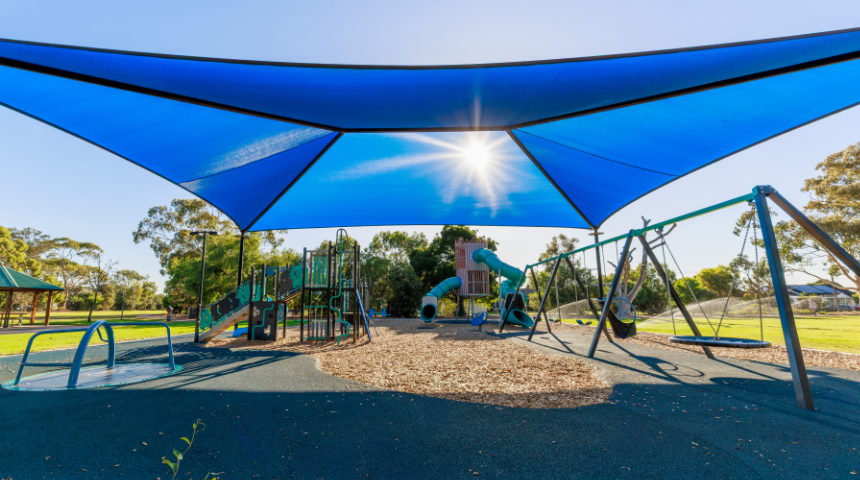
PlayQuip are experts in helping councils, schools, and landscape designers choose the right solution for each playground, rather than recommending a single type of softfall.
When we refer to softfall we mean the impact attenuating surfacing in play areas. Playground equipment with a fall height more than 600mm above playing surface level must have a certified impact absorbing surface to minimise injuries.
Top 3 Softfall Materials in South Australia
-
Certified bark chips/mulch
-
Wet pour rubber
-
Softfall Sand
Softfall surfacing is required to meet Australian Standards for Playground Safety: AS 4422:2016 – Playground surfacing – impact attenuation
Compliance ensures the surface performs as intended and provides the required standard level of protection for children during play.
What Softfall Type is Best?
Selection of softfall material comes down to a few main contributing factors including accessibility, maintenance, appearance and budget. There is no one size fits all solution when it comes to softfall. The best choice is to find the right solution that fits your long-term goals for the playspace. Here are some pros and cons on the most popular options.
Certified Softfall Mulch
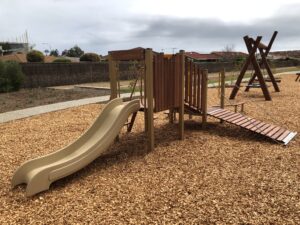
Specially processed wood/pine-bark mulch safety tested for use in play areas.
Pros
- Natural Appearance – compliments nature spaces and blends easily into surroundings
- Cost Effective – one of the most economical loose-fill options
- Good Impact Absorption – install height of min. 300mm
- Easy to Top-up – additional mulch can be added when needed to maintain min. 200mm
- Suits Large Play spaces – practical choice for large areas
Cons
- Ongoing Maintenance – high traffic areas e.g. swings and slides require ongoing top-ups
- Limited Accessibility- not suitable for mobility aids e.g. wheelchairs, walkers or prams
- Dispersal – mulch can spread into other areas and paths requiring maintenance
Wet Pour Rubber
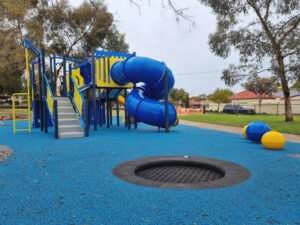 Seamless shock absorbing safety surface made from rubber granules mixed with polyurethane resin. Available in various attenuation levels depending on fall height of equipment.
- Excellent Accessibility – continuous surface provides full access for everyone
- Seamless Surface – no trip points or dispersal of material into surrounding areas
- Design Flexibility – creativity to introduce colours, shapes and dynamic elements
- Low Maintenance – no raking or regular top-ups of surface to ensure compliance
- Great for High Traffic Areas – rubber is durable and great for high impact absorption
Cons
- Higher Initial Investment – initial cost is more expensive than loose fill options
- Surface Temperature – rubber absorbs heat and can become hot in full sun
- Repairs Cost – repairs are more involved to ensure attenuation compliance
Softfall Sand
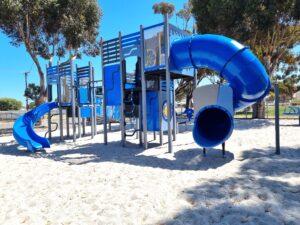 Sand that is specifically washed, graded and safety-tested for use in play areas.
- Natural and Versatile – creates natural looking experience especially in coastal areas
- Sensory – sand is a sensory element and encourages additional play opportunities
- Cost Effective – can be a cost-effective option depending on location and requirements
- Temperature – colour is lighter and absorbs less heat than some rubber types
- Impact – great loose-fill material for impact absorption
Cons
- Ongoing Maintenance – like mulch, sand can be displaced and needs to be maintained to a depth of at least 200mm high to comply with the standard.
- Contamination – sand can become easily contaminated with debris, dirt, etc.
- Limited Accessibility – not suitable for any mobility aids and can be hard to walk/run in
Considerations
For a large traditional style playground with a tighter budget, certified mulch may be the best option. For an inclusive high traffic play space where accessibility and low day-to-day maintenance are the main objectives, wet pour rubber would be the right solution. A playground that wants to capture a natural and sensory based experience, softfall sand would tick the box.
Mixed Surfaces
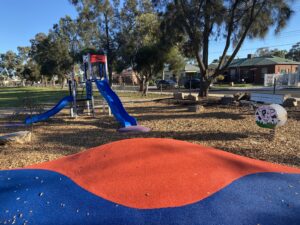
When a single material does not meet all the needs of the project, a blend of softfall types is introduced. Wet-pour rubber pads under swings, slides and high-traffic entry points can be installed alongside mulch or sand to create a more cost-effective and purpose driven solution.
References
Australian Playground Standards
- AS 4685:2021 – Playground equipment
- AS 4422:2016 – Playground surfacing – impact attenuation